HIFU / Thermage / Ulthera Face Lifting
Face starting to sag, cheeks dropping, jawline blurring — compare HIFU, Thermage, and Ulthera, then let the physician choose the device that suits your skin.
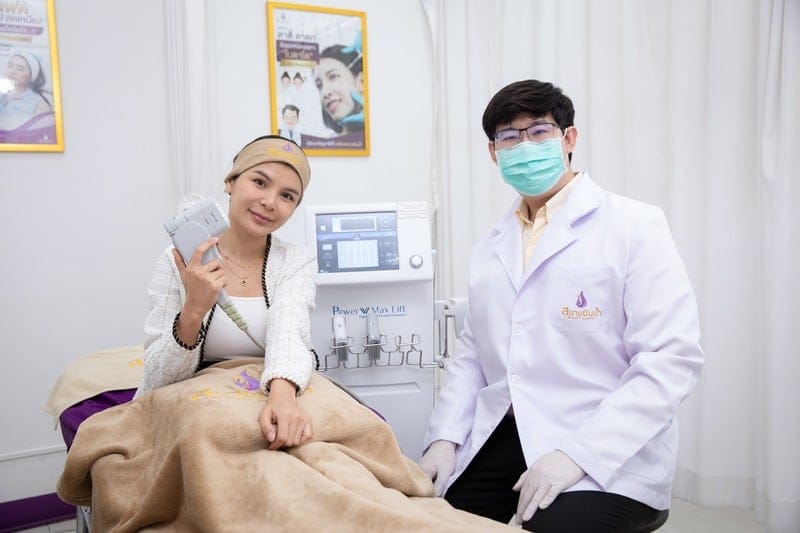
What is energy-based face tightening?
It uses energy (focused ultrasound or radiofrequency waves) to stimulate the body to produce new collagen, making the skin look firmer and lifted. HIFU works at a deep level (the SMAS layer) and suits deep lifting and tightening. Thermage uses RF waves to stimulate collagen in the dermis, and Ulthera is one of the HIFU devices cleared by the FDA.
How do Ulthera, Thermage, and HIFU compare?
A summary of the technology differences and suitability of each tightening device — the actual choice should follow the physician's assessment of skin layers and sagging, not the device name alone.
| Comparison | Ulthera | Thermage | HIFU (general devices) |
|---|---|---|---|
| Energy | High-intensity focused ultrasound with micro-point focus and skin-layer imaging (MFU-V) | High-frequency monopolar radiofrequency (Monopolar RF) | High-intensity focused ultrasound (HIFU) |
| Skin layer targeted | The deep SMAS layer (about 4.5 mm) and the deep dermis, depending on the cartridge chosen | Dermis and subcutaneous fat, using heat over a broad area | SMAS layer or deep dermis, depending on each device's model and cartridge |
| Seeing the skin layer during treatment | An ultrasound screen lets the physician scan the skin layers in real time before every shot | No structural scanning screen; relies on heat spreading through the skin | Most have no real-time structural display |
| Popular strengths | Deep structural lifting, jawline definition, droopy brows, and droopy eyelids | Firming soft, crepey skin, fine lines, and the eye area | Mild to moderate sagging and jawline contouring |
| Approximate result duration | About 1–1.5 years, depending on care and each person's skin condition | About 1–1.5 years, depending on care and each person's skin condition | Usually shorter, about 3–6 months, depending on the device model and treatment frequency |
Choose Ulthera when: the face is sagging at a deep level, the jawline is blurring, or the brows and eyelids are drooping, and you want a lift that supports the SMAS layer while the physician sees the skin layers during treatment.
Choose Thermage when: the skin is soft and crepey, has fine lines, or you want skin tightness and firmness more than a deep lift.
Choose HIFU when: sagging is still mild and you want ongoing collagen stimulation or jawline contouring within a controllable budget.
The three devices are not interchangeable in every case. The physician will choose after assessing fat layers, sagging, and skin quality — see more at HIFU vs Ulthera vs Thermage: which should you choose?
Suitable for
- People with mild to moderate facial sagging
- People who want skin lifting and tightening without surgery
- People with wrinkles that are starting to deepen
- People who want a more defined jawline contour
- People who want to tighten their skin after weight loss
Consult a physician first / Cautions
- People who are pregnant
- People with an implanted pacemaker — for the Thermage case
- People with an infection or wound in the treatment area
- People with metal implants in the face — should inform the physician
- People with severe inflammatory skin disease on the face
- People who recently had laser or skin tightening — wait for the skin to recover
What the physician will assess
- 1 The degree of sagging — mild, moderate, or severe
- 2 Skin thickness and the subcutaneous fat layer
- 3 Previous treatments — filler, thread lifting, laser
- 4 Overall health and allergy history
- 5 Expectations — to explain the realistic range of possible results
Treatment steps
Assessment and device selection
The physician assesses skin condition and recommends a suitable device (HIFU / Thermage / Ulthera).
Cleansing and skin preparation
The face is cleansed; a topical anesthetic may be applied.
Skin tightening treatment
The physician delivers energy to the target areas according to the treatment plan; it takes about 30–90 minutes.
Assessment and aftercare advice
The physician checks the initial result and gives aftercare instructions.
Timeline and expected results
| Timeframe | Expected result |
|---|---|
| Immediately after treatment | Slight results may be visible from mild swelling |
| 1–3 months | Tightening starts to become visible as new collagen forms |
| 6 months | Full results; skin looks clearly firmer and lifted |
| 1–2 years | Results last, depending on the device and skin condition |
Risks and side effects
Common (temporary)
- Redness in the treated area
- Mild swelling
- Discomfort or stinging during treatment
- Slightly dry skin
Less common
- Bruising
- Burns from energy (if the energy is set too high)
- Abnormalities of the facial nerves
Comparing skin-tightening devices
| Device | Energy | Depth | Strengths |
|---|---|---|---|
| HIFU | Focused ultrasound | SMAS layer (deep) | Deep, clearly visible lifting |
| Ulthera | Ultrasound (Ultherapy) | SMAS layer (deep) | FDA-cleared, with clear real-time imaging |
| Thermage | Radiofrequency (RF) | Dermis | Skin tightening, collagen stimulation |
Frequently asked questions
How do HIFU, Thermage, and Ulthera differ?
HIFU (High-Intensity Focused Ultrasound) uses focused ultrasound that reaches the SMAS layer for deep-level lifting. Thermage uses radiofrequency (RF) waves to stimulate collagen in the dermis, and Ulthera is an FDA-cleared HIFU brand. Each device has different strengths; the physician will recommend based on each person’s skin condition.
When will I see results?
Results start to appear about 1–3 months after treatment as new collagen forms and the skin tightens. Improvement continues gradually up to 6 months, depending on the device used and each person’s skin condition.
Does the treatment hurt?
Moderate discomfort is possible, especially with HIFU over bony areas such as the sides of the face, but it is tolerable. The physician may use topical anesthetic or cold compresses to reduce discomfort.
How often do I need treatment?
Results generally last about 1–2 years depending on the device used and skin condition. Repeat treatments every month are not necessary; the physician will recommend an appropriate interval for repeat treatment.
My face sags at every level — what should I do?
It depends on the degree of sagging. Mild sagging may be treated with HIFU or Thermage; moderate sagging may be combined with thread lifting; and in more severe cases the physician will assess whether additional procedures are appropriate. Consult a physician to plan what suits you.
A note from Dr. Net (หมอเน็ท)
"Each tightening device has different strengths. I assess the skin condition and the needs of each patient before recommending a suitable device. Some people get better results from combining more than one device. What matters is having expectations that are reasonable for the actual skin condition."
— Dr. Net (หมอเน็ท), Physician at Sanambinnam Clinic
Book a skin-tightening consultation
Sanambinnam Clinic (คลินิกสนามบินน้ำ) — 421 Ngamwongwan Road, Bang Khen, Mueang Nonthaburi, Nonthaburi 11000
Phone / appointments: 086-464-2410
The clinic is open daily, 10:30–20:00